What We're Building Today
Session Arc
What You'll Walk Away With
- A live, deployed web app you built
- Understanding of full-stack architecture
- Skills to scope and spec products
- AI-powered development workflow
Start With the Problem
Everything else is feature creep until this works perfectly.
Good Problem Statements
- "I can't remember which games I own"
- "We waste 20 min deciding what to play"
- "I want to track who wins the most"
Common Mistakes
- "I want to build the next BoardGameGeek"
- Trying to solve 10 problems at once
- Building features nobody asked for

Writing a Product Spec
Feature Breakdown — MVP vs. Nice-to-Have
| Feature | MVP | Post-MVP |
|---|---|---|
| Browse game collection with search | Must | |
| Game details (players, time, description) | Must | |
| Tonight's Picks with voting | Must | |
| YouTube tutorial embeds | Must | |
| Play session history & scores | Later | |
| Add custom games via photo | Later | |
| Player leaderboards | Later |
PRD Template
- Problem statement (1 sentence)
- Must-have features (3-5 max)
- Nice-to-have features
- Data model (what are you storing?)
- Tech stack choices
Frontend vs. Backend
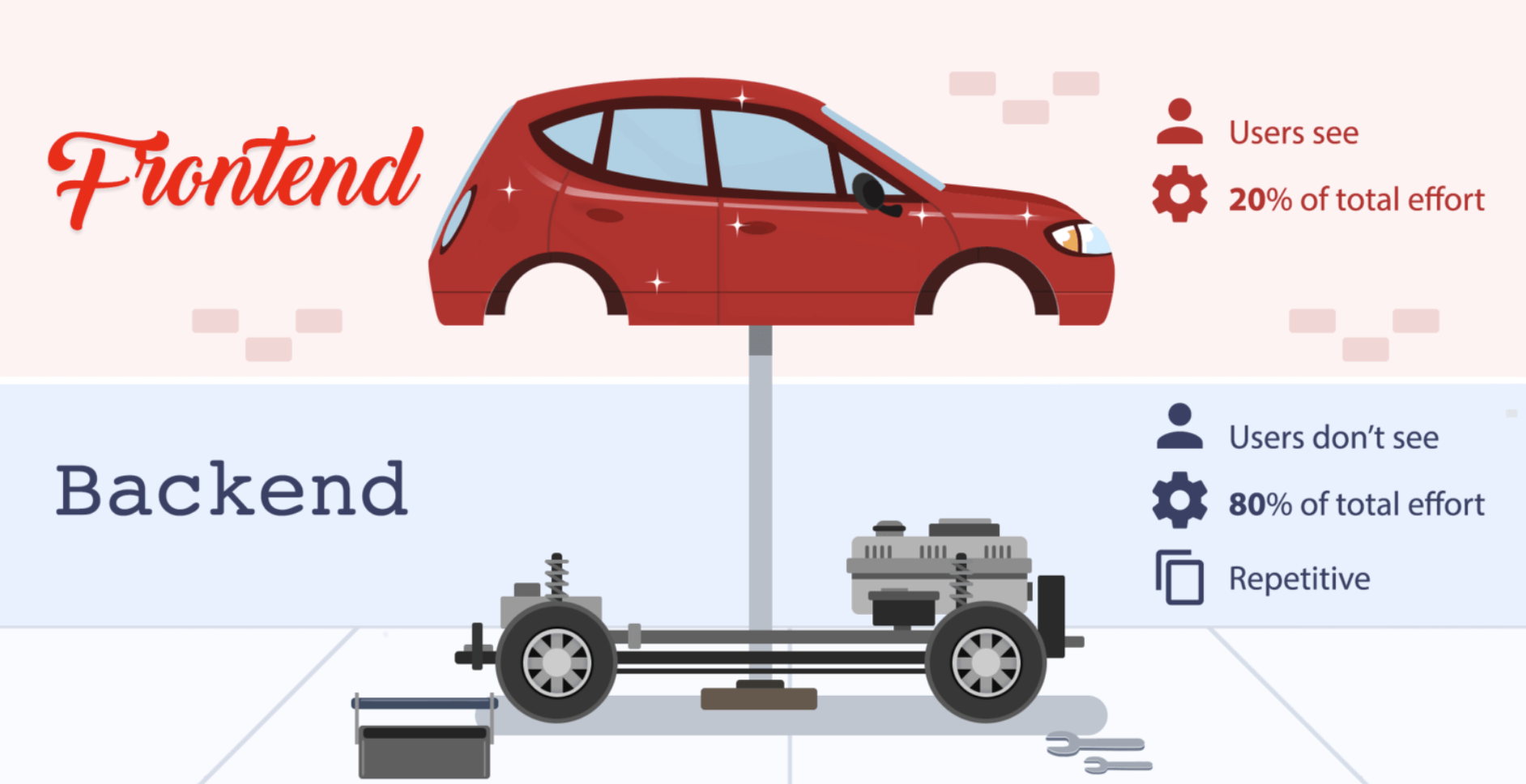
Frontend
What users see — buttons, pages, layout, colors. Built with React / Next.js.
Our Architecture
 Next.js (App Router)
React frontend + server-side rendering + API routes. One framework, full stack.
Getting Data Is the Hard Part
Where Does Data Come From?
Public APIs
Best case. Structured, documented, rate-limited. Not always available.
Web Scraping
When there's no API. Extract data from websites. This is what we're doing.
Manual Entry
Sometimes the simplest option. Works for small datasets.
Our Data: BoardGameGeek
- Game name, player count, play time
- Box art images & descriptions
- YouTube tutorial links
- Ratings & year published
13 Games Scraped
/pic9156909.png "Catan")
/pic394356.jpg "Dominion")
/pic4458123.jpg "Wingspan")
/pic3043734.jpg "King of Tokyo")
/pic3031286.jpg "Sushi Go Party!")
/pic6398727.png "SCOUT")
/pic3835714.jpg "BANG!")
+ For Sale, Startups, ito, Salt & Pepper & more
Example Output
AI-Powered Scraping
Traditional Scraping vs. Browser Use
| Aspect | Python / BeautifulSoup | Browser Use (AI Agent) |
|---|---|---|
| Setup difficulty | Write CSS selectors by hand | Describe what you want in English |
| Dynamic content | Breaks on JS-rendered pages | Uses a real browser, handles JS |
| Site changes | Selectors break constantly | AI adapts to layout changes |
| Anti-bot measures | CAPTCHAs block you | Navigates like a human |
| Speed | Fast for simple pages | Slower (10-12 min per batch) |
CLI-Driven Development
Build a Go CLI tool that orchestrates the scraper. Input JSON list of games, output structured data. Repeatable, scriptable, version-controlled.

Why Not Just Python?
Python scraping scripts are fragile and break when sites change. Browser Use sends an AI agent to browse the site like a human — it understands context, not just HTML selectors.
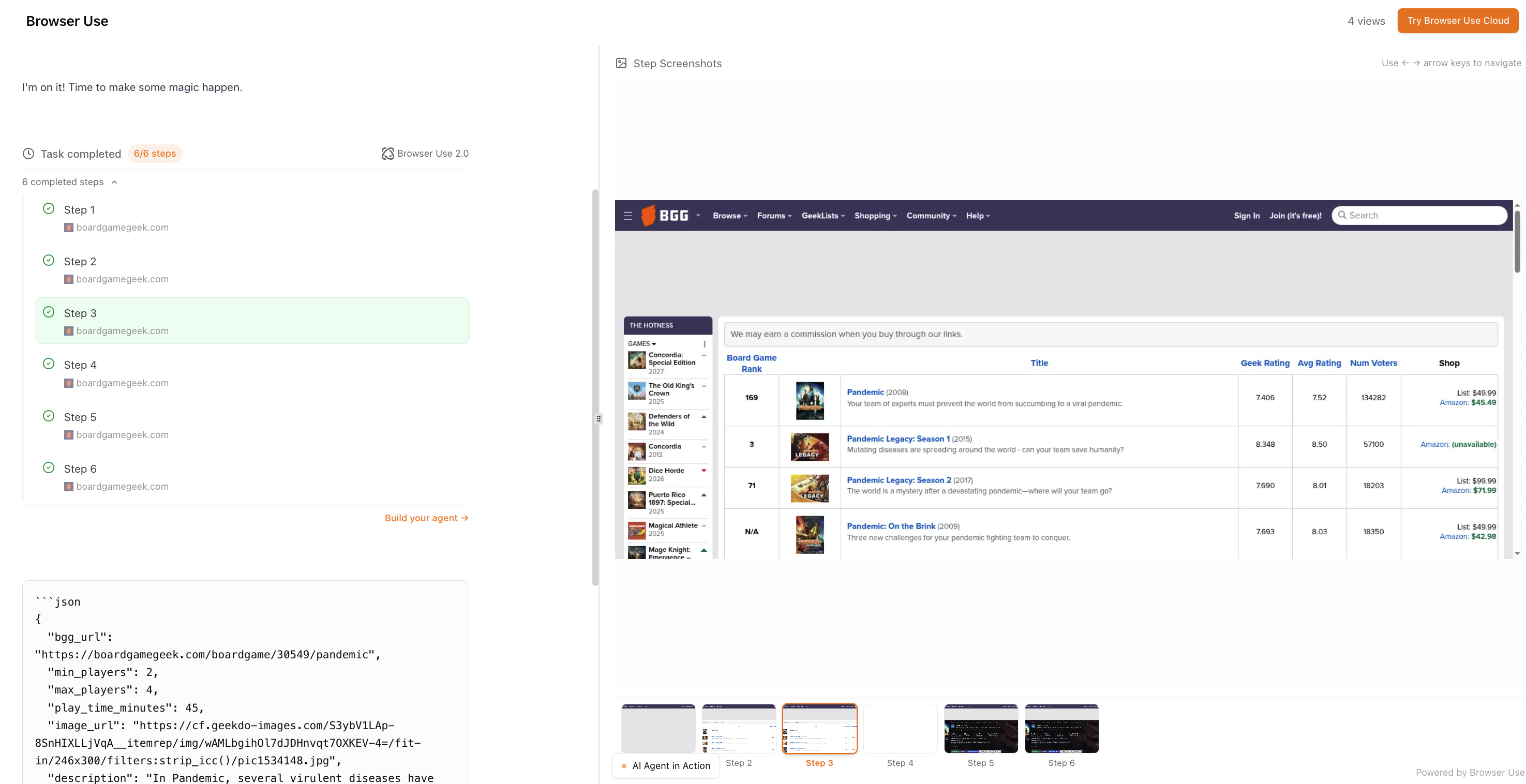
Browser Use
AI agents that interact with live websites — navigate, click, extract data
Show Live Example — Agent scraping BoardGameGeek
Why a Go CLI for Scraping?
The CLI-First Approach
- Agents call CLIs directly, verify output, and close the feedback loop
- Go’s simple types make AI-generated code more reliable with fast linting
- CLIs are repeatable, scriptable, version-controlled — no UI needed
- Text in, text out — the simplest interface for humans and AI
Why Go Specifically?
Peter found that AI agents write excellent Go code. Go compiles to a single binary, has fast linting, and its straightforward syntax means fewer AI hallucinations. TypeScript for web, Go for CLIs — pick the right tool for the job.
Peter Steinberger — Shipping at Inference-Speed
How one of the most productive AI-native engineers builds software with CLI-first tools

Building with AI Assistance
The AI-Assisted Development Flow
Why CLI Tools?
- Terminal-based AI tools (Claude Code) can read, write, and run your code
- You describe what you want in plain English
- AI generates code, runs it, fixes errors
- You stay in control — approve every change
Tools We're Using
- Claude Code — AI coding in your terminal
- Cursor — AI-native code editor
The key insight: you don't need to know how to code — you need to know how to describe what you want.
Supabase & Database Setup
Setup Pipeline
Our Data Model
Why Supabase?
- Free hosted Postgres — no server to manage
- Auto-generated REST API from your tables
- Built-in auth (if you need it later)
- Dashboard to view/edit data visually
Supabase
Open source Firebase alternative — Postgres database, auth, real-time, storage
Deploy with Vercel
From Code to Live URL in 3 Steps
Environment Variables
Add your Supabase keys in Vercel's settings:
Auto-Deploy on Push
- Every
git pushtriggers a new deploy - Preview URLs for branches & PRs
- Rollback to any previous deploy instantly
What We Built
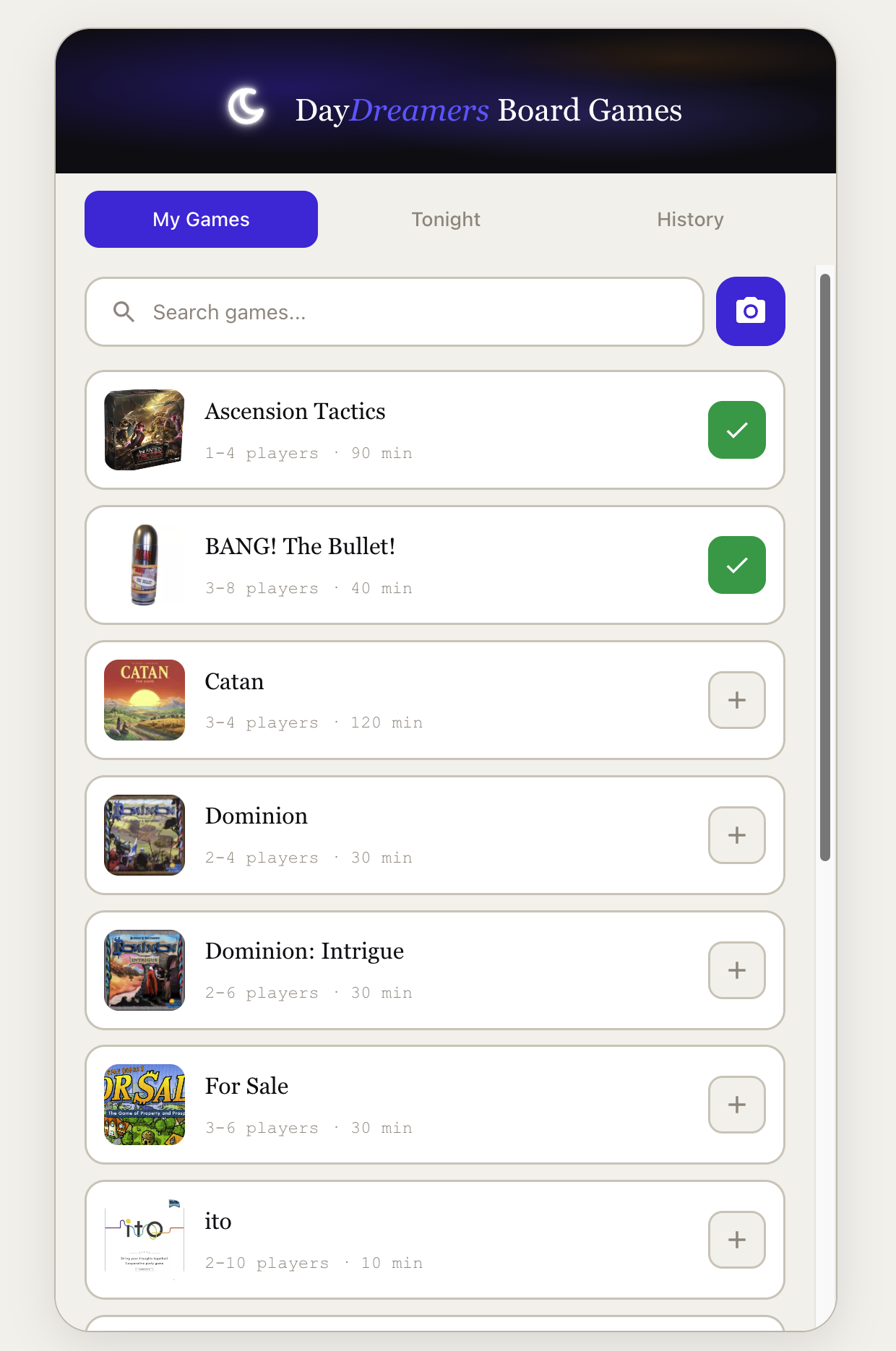
DayDreamers Board Games — Live App
Browse the collection, vote on tonight’s picks, watch tutorials
Game Collection
Browse 13 games with search, box art, and ratings
Tonight’s Picks
Vote for games, enter your name, real-time results
Game Details
Description, rating, and YouTube tutorial embeds
The Full Stack
Your Homework
Build Your Own App
- Pick a problem you care about
- Write a 1-page PRD (use AI to help!)
- Set up Supabase + Next.js project
- Use Claude Code / Cursor to build the UI
- Deploy to Vercel and share the link
Resources to Explore
- Next.js Tutorial — official learn path
- Supabase Docs — quick starts
- Tailwind CSS — utility-first styling
- Browser Use — AI web scraping
- Vercel Docs — deployment